Relocating to Washington, DC
A move to the Washington area starts with a question most newcomers don't know to ask: DC, Maryland or Virginia? The three sit minutes apart, and one commute can cross two of them — but each taxes income, assigns public schools and charges property and settlement taxes by its own rules. Kelly Balmer is a Compass Vice President licensed in all three who made her own move here from England, so a search can start with “which side of the line?” before it starts with a house.
First decision: DC, Maryland or Virginia
“Washington” to most new arrivals means the whole region: the District itself, the Maryland suburbs to the north and east, and Northern Virginia across the Potomac. The choice changes more than the view. Here is what moves when you cross the line — the numbers sit on the linked guides, each with its official sources.
| Washington, DC | Maryland | Virginia | |
|---|---|---|---|
| Tax on your wages | DC's income tax is imposed on its residents. Maryland and Virginia residents who commute in are generally taxed at home instead — conditions apply. | Generally where you live, not where you work — conditions apply. Counties charge a local income tax on top of the state rate: 3.20% in Montgomery and Prince George's for 2026. | Generally where you live, not where you work, under Virginia's reciprocity with DC and Maryland — conditions apply, including a daily-commute test for DC residents. |
| Public schools | A guaranteed place at your in-boundary DC Public School from kindergarten through 12th grade; new pre-K, out-of-boundary, citywide and participating charter places go through the My School DC lottery — a current or feeder-pattern school needs no lottery application. | Assigned by address by the local school system; boundaries can be redrawn. | Assigned by address by the local school system; boundaries can be redrawn. |
| Property tax | $0.85 per $100 of assessed value, with a homestead deduction for owner-occupants who file. A higher rate applies to the top slice of very high-value homes with one or two units. | A small state rate under county rates; a homestead credit caps how fast an owner-occupant's taxable assessment grows. | Each city and county sets its own rate. Reassessment schedules vary by locality; Arlington, Fairfax, Alexandria and Loudoun reassess every year. |
| Taxes when you buy | Recordation and transfer taxes. By law the seller is responsible for the transfer tax and the parties are jointly liable for the recordation tax, so check how the contract allocates them. Recordation tax is reduced for qualifying first-time buyers. DC closing costs | State transfer tax plus county recordation and transfer taxes that vary by county. Maryland closing costs | State recordation tax on the deed and on the loan; localities may add a local tax. Fairfax County's combined rate is approximately 0.333% of each applicable tax base. The buyer pays by custom, subject to the contract. Virginia closing costs |
The full side-by-side, with sources: DC vs. Maryland vs. Virginia for home buyers. More figures: property taxes across DC, Maryland and Virginia and the closing-cost calculator. Wage-tax treatment is general — confirm your own case with a tax adviser.
Schools: the address decides
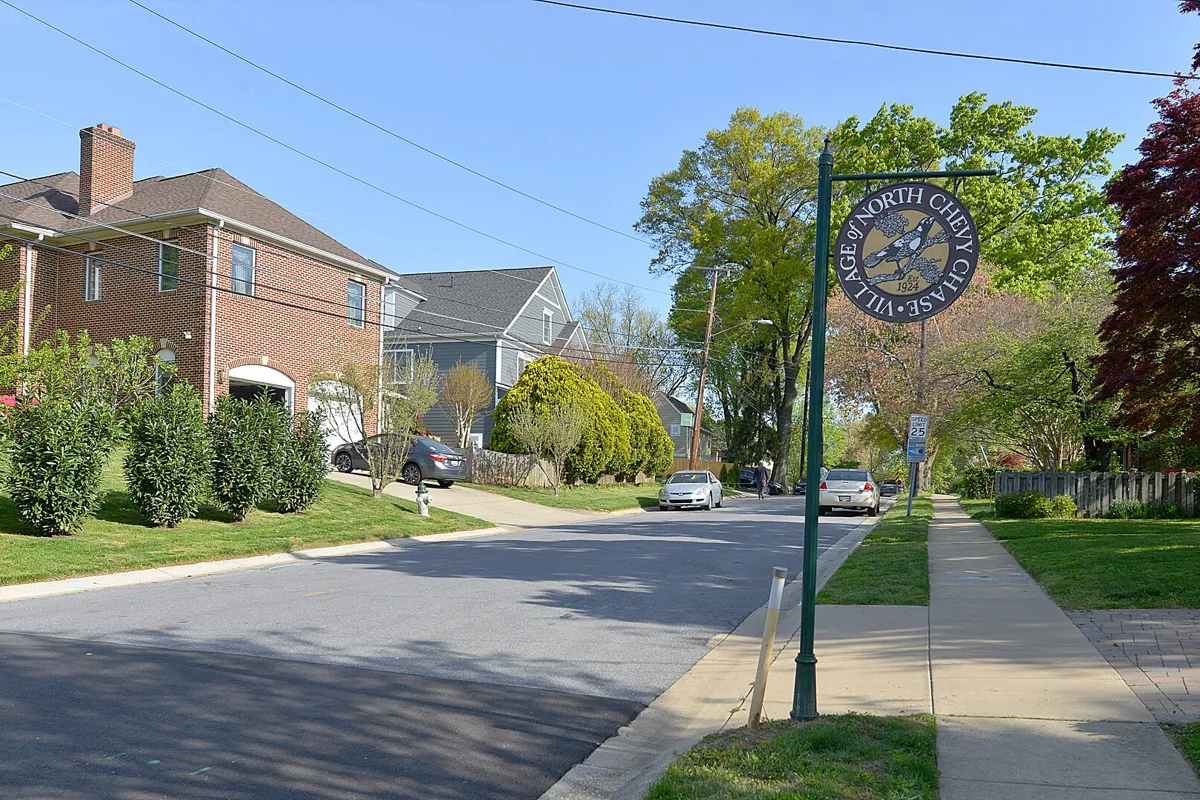
For families this is the biggest structural point. Most public school places here are assigned by the home address, not applied for.
- DC. Every address has in-boundary DC Public Schools, with a guaranteed right to enroll from kindergarten through 12th grade. New pre-K, out-of-boundary, citywide and participating public charter places go through the My School DC lottery; a student's current school or feeder-pattern school does not need a lottery application.
- Maryland and Virginia. Local school systems also assign schools by address, and assignments can shift when a school moves or boundaries are redrawn — Kelly's Wootton High School guide covers one current example.
- Check the address, not the town. Two homes a few streets apart can sit in different school boundaries. Confirm the assigned schools for any specific home with the school district before you make an offer — its boundary tool may not yet show approved changes.
Rent first, or buy on arrival?
Both work, and the right answer depends on what you already know.
- Renting first can give you time to assess the commute, school options and expected length of stay.
- Before buying, consider affordability, transaction costs and how long you expect to own the home.
- Buying before you arrive. Kelly works with buyers by video before they land. Ask the title company which remote-signing options are available.
How buying works here

If you have bought elsewhere, the steps will look familiar; the forms and the taxes are local. Closing timing depends on the contract, financing and program approvals.
- Financing first. Discuss financing documentation with your agent before making an offer.
- Your own agent. Under a National Association of REALTORS rule in place since August 17, 2024, buyers working with a REALTOR sign a written buyer agreement before touring a home. Compensation is negotiable.
- The contract. Contract forms, escalation clauses and contingencies differ by form — see what the Maryland statewide and Northern Virginia forms say.
- Settlement day. In all three you can choose the settlement or title company, though the rule behind it differs, and who pays which settlement taxes changes with the jurisdiction.
New to buying? Start with the first-time home buyer guide, which takes the whole process step by step. For the rules side by side, see DC vs. Maryland vs. Virginia for home buyers.
Where to look
Kelly's neighborhood guides cover all three jurisdictions. A few places newcomers ask about most:
A relocation timeline

One possible order — adjust it to your own move.
- First. Talk to a lender about your income and timing, and decide whether you will rent first or buy.
- Next. Narrow DC, Maryland or Virginia by commute and school plan; start video tours with Kelly.
- Buying. Follow the step-by-step guide, and run the numbers in the mortgage calculator.
- Moving. The guide's moving house section covers change of address and hiring movers across a state line.
- One rule for every transfer. Never act on wiring instructions from an email alone, however genuine they look. Confirm the details by calling a phone number you agreed with the title company beforehand, not one from the email.
Moving from abroad
Kelly is English and made the move from the UK to the Washington region herself before building a 13+ year career here. If you are coming from Britain, two guides go deeper: relocating to DC from the UK covers credit from zero, visas and loans, and the home you leave behind; buying in DC from the UK translates the purchase itself, term by term.

Vice President & Partner, Mollaan Babbington Group at Compass · Licensed in DC · MD · VA
This page is general guidance, not tax or legal advice. Tax rates, school boundaries and closing taxes change; the linked guides carry the current figures and their official sources. Confirm your own tax position with a tax adviser and school assignments with the school district.
Relocating to the Washington area
Is it better to live in DC, Maryland or Virginia?
There is no single right answer, because the three differ on things that matter differently to each household: where your pay is taxed, which public schools an address is assigned to, how property tax works and what you pay in taxes at settlement. Kelly Balmer is licensed in DC, Maryland and Virginia, so a search can compare all three before you commit to one.
If I work in DC but live in Maryland or Virginia, where do I pay income tax?
Wages are generally taxed where you live, not where you work, under reciprocity arrangements among DC, Maryland and Virginia. Conditions apply and differ by where you live and work — for example days present, keeping a home in the other jurisdiction and wage or salary income only; for DC residents working in Virginia, Virginia's published exemption includes commuting there every day. Maryland counties also charge a local income tax on top of the state rate: 3.20% in Montgomery and Prince George's for 2026. Check your own situation with a tax adviser.
How are public schools assigned in the Washington area?
Mostly by home address. In DC, every student from kindergarten through 12th grade has a guaranteed right to enroll in their in-boundary DC Public School, while new pre-K, out-of-boundary, citywide and participating public charter places go through the My School DC lottery; a current or feeder-pattern school does not need a lottery application. In Maryland and Virginia the local school system assigns schools by address too, and boundaries can change. Check the assigned schools for a specific home with the school district before you make an offer; a boundary tool may not yet show approved changes.
Should I rent first or buy when I relocate?
Renting first can give you time to assess the commute, school options and expected length of stay. Before buying, consider affordability, transaction costs and how long you expect to own the home.
Can I buy a home in the DC area before I move?
Yes — Kelly works with buyers by video before they arrive. Ask the title company which remote-signing options are available, and discuss financing documentation with your agent before making an offer.
How long does it take to buy a home in the DC area?
Closing timing depends on the contract, financing and program approvals, plus however long the search takes. Two fixed points sit inside it: a lender must give you a Loan Estimate within three business days of your application, and you must receive the Closing Disclosure at least three business days before you close.
Start with which side of the line.
A short call with Kelly sets DC, Maryland and Virginia against your commute, school plan and budget — before you book a single tour.